12 Child Support Questions to Ask Before Agreeing to Payments
Ask these child support questions before agreeing to payments. Check income, parenting time, extra costs and terms that need legal review.
Child Support Estimate ·
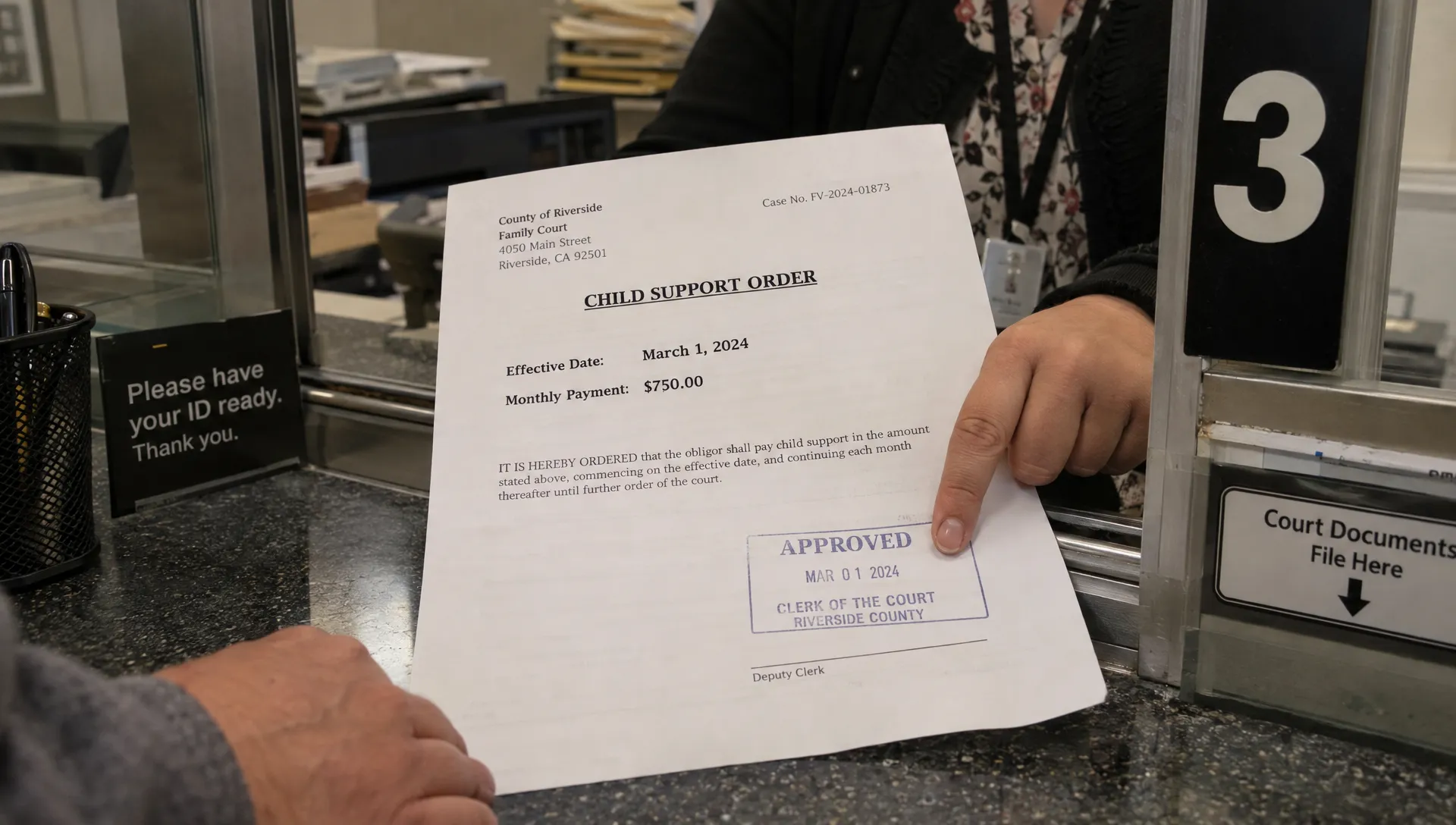
Agreeing to a monthly amount without asking the right child support questions can leave major costs unresolved. The number matters, but so do the income figures behind it, the parenting schedule, payment records and rules for future changes. A workable agreement should explain what each parent owes, when payments begin and how expenses beyond basic support will be handled.
Before accepting a proposal, compare it with your state’s current guidelines and any existing order. These 12 questions can help you spot missing information and prepare for a discussion with the other parent, a mediator, an attorney or your child support agency.
Gather the records behind the proposed payment
Start with documents rather than competing estimates. Useful records include:
- Recent pay stubs, tax returns and records of bonuses or other income
- The parenting schedule and a record of actual overnights
- Childcare invoices, health insurance costs and recurring medical expenses
- Existing support orders, payment histories and any proposed agreement
Use the same time period when comparing income. One parent’s unusually high bonus month should not be casually compared with the other parent’s annual average. If information is missing, identify it before treating the proposed amount as reliable.
Also separate estimates from obligations. A calculator can help you evaluate a proposal, but it does not change an existing order or establish an enforceable payment requirement by itself.
12 support questions to resolve before signing
1. Which state’s rules apply, and is there already a controlling order?
Do not assume you can choose whichever state produces the preferred amount. Where the child and parents live, which tribunal issued an existing order and interstate jurisdiction rules can affect where support is established or modified.
Ask for copies of every relevant court or administrative order, including temporary orders. Check the issuing state, case number, payment amount and any later modifications. A proposed private agreement may conflict with an obligation that is already enforceable.
If a parent has moved, determine which agency or court can act before negotiating a replacement amount. Moving across state lines does not automatically cancel an order or authorize a different state to modify it.
The practical goal is to identify the applicable guideline worksheet and the authority that must approve any change. For an interstate case, get that answer from the responsible agency or a qualified attorney rather than relying on the parents’ agreement about jurisdiction.
2. What income counts for each parent?
Salary is only the starting point. Depending on state rules, relevant income may include overtime, commissions, bonuses, self-employment earnings, rental income or certain benefits. States also differ in their treatment of deductions and other support obligations.
Income-related support questions should focus on both the source of the money and how it was measured. Ask whether the calculation uses gross income, an adjusted figure or a state-defined net amount. Confirm that both parents’ figures follow the same guideline definitions.
For variable earnings, ask what averaging period is appropriate. For self-employment, distinguish business revenue from income available for support, and check which claimed expenses the guidelines allow.
If the proposal assumes someone could earn more than they currently do, ask why. Imputed income is not simply a number the other parent chooses. Applicable rules and evidence about employment, earning ability and individual circumstances matter. The federal framework for state child support guidelines addresses considerations for income imputation, but the state’s rules control the actual calculation.
3. What documents verify the numbers, and what remains disputed?
A proposed worksheet is only as useful as its inputs. Ask which records support each income figure, insurance amount, childcare expense and adjustment. A tax return can provide context without necessarily showing current earnings accurately after a job change.
For a business owner, relevant documentation may include business tax returns, profit-and-loss statements and records explaining expenses. For an employee, recent pay statements can reveal deductions, overtime and year-to-date compensation.
These support questions are easier to resolve when disagreements are specific. Instead of saying the entire estimate is wrong, identify the disputed entry: a missing commission, an outdated premium or an unsupported childcare charge.
Create a short record of agreed inputs and unresolved items. Exchange sensitive financial records through appropriate, secure channels, following any disclosure requirements or protective orders. If key information cannot be verified, ask about formal disclosure procedures before signing, rather than assuming an informal promise to provide it later will be enough.
4. How does the parenting schedule affect the calculation?
Equal parenting time does not automatically mean no child support. Income differences, healthcare costs, childcare expenses and the state’s calculation method can still produce a payment obligation.
Ask how your state measures parenting time. Some calculations rely on overnights, while others use different definitions or adjustments. Confirm whether the proposed worksheet reflects the ordered schedule, the actual schedule or another measure required by state rules.
School breaks, summer arrangements and long-distance travel can create discrepancies. If the proposal assumes a shared schedule that has not started, ask how the amount will be handled if that schedule never becomes consistent.
Keep parenting arrangements focused on the child’s needs rather than using support as leverage. Nonpayment generally does not authorize withholding court-ordered parenting time, and missed visits do not automatically authorize stopping support. If safety concerns exist, use the appropriate legal process. Make sure the financial proposal and parenting plan describe compatible arrangements without treating one obligation as permission to disregard the other.
5. Who provides health insurance, and how are uncovered bills divided?
Medical support questions need more detail than a promise to split medical costs. Identify who will maintain coverage, whether suitable coverage is available and what portion of the premium is attributable to the child under the applicable rules.
Ask whether that premium has already been credited or allocated in the support worksheet. Otherwise, the same expense could be counted twice or omitted entirely.
Then address costs insurance does not pay. Depending on the child’s needs, these may include deductibles, copayments, prescriptions, dental treatment, orthodontics or therapy. The agreement should distinguish routine care from expenses requiring advance discussion, while preserving a practical process for urgent care.
Set a reimbursement procedure: what documentation is required, how it will be delivered and how long the other parent has to respond or pay. Also clarify what happens when coverage changes. A percentage allocation alone does not explain how parents will manage bills, insurance explanations of benefits or disputed charges.
6. Which childcare expenses are included, and how will changes be handled?
Work-related childcare can be a substantial expense separate from the basic support amount. Ask which costs qualify under state rules and whether they are already incorporated into the proposed payment.
Distinguish current invoices from projected spending. School-year aftercare, summer care and care for a younger sibling may require different calculations. Confirm which child’s expenses are included and whether subsidies or other relevant benefits affect the eligible cost.
Childcare support questions should also address predictable changes. What happens when a child starts school, a provider raises rates or a parent changes work schedules? Will parents exchange updated invoices, and does the order provide an adjustment process or require formal review?
Avoid assuming that every additional activity or babysitting expense qualifies as work-related childcare. Write down what is covered, how each parent’s share is determined and what approval is needed before committing to a new provider or substantially higher cost.
7. What is the guideline amount, and why would we depart from it?
Ask to see the completed guideline worksheet before discussing whether the proposed amount is fair. Verify the number of children, income entries, parenting-time assumptions and expense adjustments.
State guidelines generally create a presumptive amount, but a court may approve a different amount when the applicable legal requirements are met. That does not mean parents can replace the calculation with any figure they prefer and expect approval.
If the proposal differs from the guideline result, identify the reason, supporting evidence and any findings the court must make. Distinguish an actual adjustment under the guideline formula from a departure outside it.
Be especially careful with informal trade-offs. Accepting lower support in exchange for a vehicle, property or another promise can create problems if the arrangement is not legally appropriate and properly approved. Ask a lawyer to review any proposal connecting child support with property division or spousal support. Those obligations serve different purposes and may receive different legal treatment.

8. What does basic support cover, and who pays additional expenses?
Do not assume both parents share the same understanding of what a monthly payment covers. Ask how the applicable guidelines treat ordinary living costs and which expenses the order will allocate separately.
School fees, extracurricular activities, tutoring, travel between homes and other costs can become recurring disagreements. For each separate expense, clarify whether participation requires agreement, whether spending limits apply and how reimbursement works.
| Expense term | Detail to settle before signing |
|---|---|
| Activities | Which activities are covered and whether advance approval is required |
| School costs | Which fees, supplies or tuition expenses are allocated separately |
| Parenting travel | Who books transportation and how costs are divided |
| Reimbursement | Required receipts, submission method and payment deadline |
Include tax-related support questions in this discussion, too. Child support is generally neither deductible by the payer nor taxable to the recipient. Eligibility for child-related tax benefits follows separate federal rules. A court agreement alone does not transfer every tax benefit; review the IRS guidance for divorced or separated parents, including whether Form 8332 is relevant to an eligible claim.
9. When do payments start, how are they sent and what is already owed?
A complete payment arrangement needs more than a monthly total. Specify the effective date, due dates, payment frequency and required payment channel. Check whether income withholding will apply and how payments are handled before withholding begins.
If an order requires payment through a state disbursement unit, follow that instruction. Direct transfers, cash or purchases for the child may not receive automatic credit toward the ordered obligation.
Separate ongoing support from any past-due balance. Ask for an official payment history when available and identify whether the proposed balance includes interest, fees or disputed credits. An arrears installment may be owed in addition to current support.
Do not assume a new agreement erases old debt. Amounts owed to a state because of public assistance may also require agency involvement. Before accepting language that settles or forgives arrears, confirm who has authority to approve it. Keep payment records and use clear identifying information so money can be credited to the correct case.
10. What happens if income, parenting time or the child’s needs change?
Future-change support questions should address both the reason for review and the procedure. A job loss, disability, substantial income change, different parenting schedule or major change in the child’s needs may justify review under state rules. None automatically changes the amount due.
Ask where a modification request must be filed, what evidence is required and whether an agency review is available. Some states also provide periodic review opportunities or specific numerical thresholds.
An agreement to exchange updated financial information can help parents identify a problem, but it should not imply that either parent may unilaterally substitute a new payment amount. Unless an authorized adjustment mechanism applies, obtain the required modification.
Timing matters. Federal law generally restricts retroactive modification of accrued support, with a limited exception connected to notice of a pending modification request. Do not assume waiting months to seek relief will eliminate those months of debt. Review the process for requesting a child support modification before a financial change becomes a growing unpaid balance.
11. When does support end, and what obligations might continue?
Do not assume every obligation ends on the child’s eighteenth birthday. State law and the order may address high school attendance, emancipation, disability or other circumstances affecting duration. College expenses may be treated differently from basic support.
End-date support questions become especially important when an order covers several children. If one child becomes ineligible, the parent paying support should not assume the total can simply be divided by the original number of children. The order may specify step-down amounts, or a recalculation may be necessary.
Ask what documentation or filing is needed to end or adjust current support and whether the agency must receive notice. Address income withholding as well, since payroll deductions may require an official change rather than a parent’s instruction.
Finally, distinguish the end of current support from payment of arrears. Past-due amounts can remain collectible after the child reaches adulthood, and an applicable obligation to pay interest may continue. Identify any separately enforceable medical or educational obligations rather than treating every expense as having the same end date.
12. What approval makes the agreement enforceable, and who should review it?
Before signing, determine whether the agreement must be submitted to a judge, an administrative tribunal or a child support agency. A signed document, even a notarized one, does not necessarily replace an existing order or satisfy the requirements for establishing support.
Review the complete package, not just the payment paragraph. The worksheet, effective date, expense allocations, reimbursement terms and modification language should be consistent. Resolve blanks, conflicting provisions and promises that depend on documents nobody has reviewed.
Bring unresolved support questions to an independent attorney, particularly if income is disputed, parents live in different states, public benefits are involved or the proposal departs from the guideline amount. A mediator can facilitate negotiations, but does not necessarily serve as either parent’s legal adviser.
Ask what happens after approval: who files the documents, who receives the signed order and who arranges payment processing. Keep a complete final copy. If you feel pressured to sign without understanding the terms, request time for independent review.
Frequently asked questions
Can parents agree that no child support will be paid? They can propose an arrangement, but state law and required court or agency approval control. A private agreement cannot reliably waive the child’s right to support or cancel an existing obligation.
Does equal custody mean neither parent owes support? No. Parenting time is only one possible input. Differences in income and responsibility for expenses can result in support even when parents share time equally.
Is an online calculator enough to decide what to sign? No. A calculator helps test assumptions and estimate an amount. It cannot resolve disputed income, determine jurisdiction, approve a guideline departure or replace a court or administrative order.
Compare the proposal before you commit
Use your answers to these support questions to build a documented comparison: the guideline estimate, the proposed payment and the separate costs each parent would carry.
The free Child Support Estimate calculator uses simplified state guidelines with inputs for income, parenting time, healthcare and childcare. Use the result as a planning tool, then confirm the applicable rules and approval process. Estimates and this article are general information, not legal advice.