How to Use an Arrears Calculator to Check Unpaid Child Support
Use an arrears calculator to check unpaid child support, account for interest and payments, and compare your estimate with official records.
Child Support Estimate ·
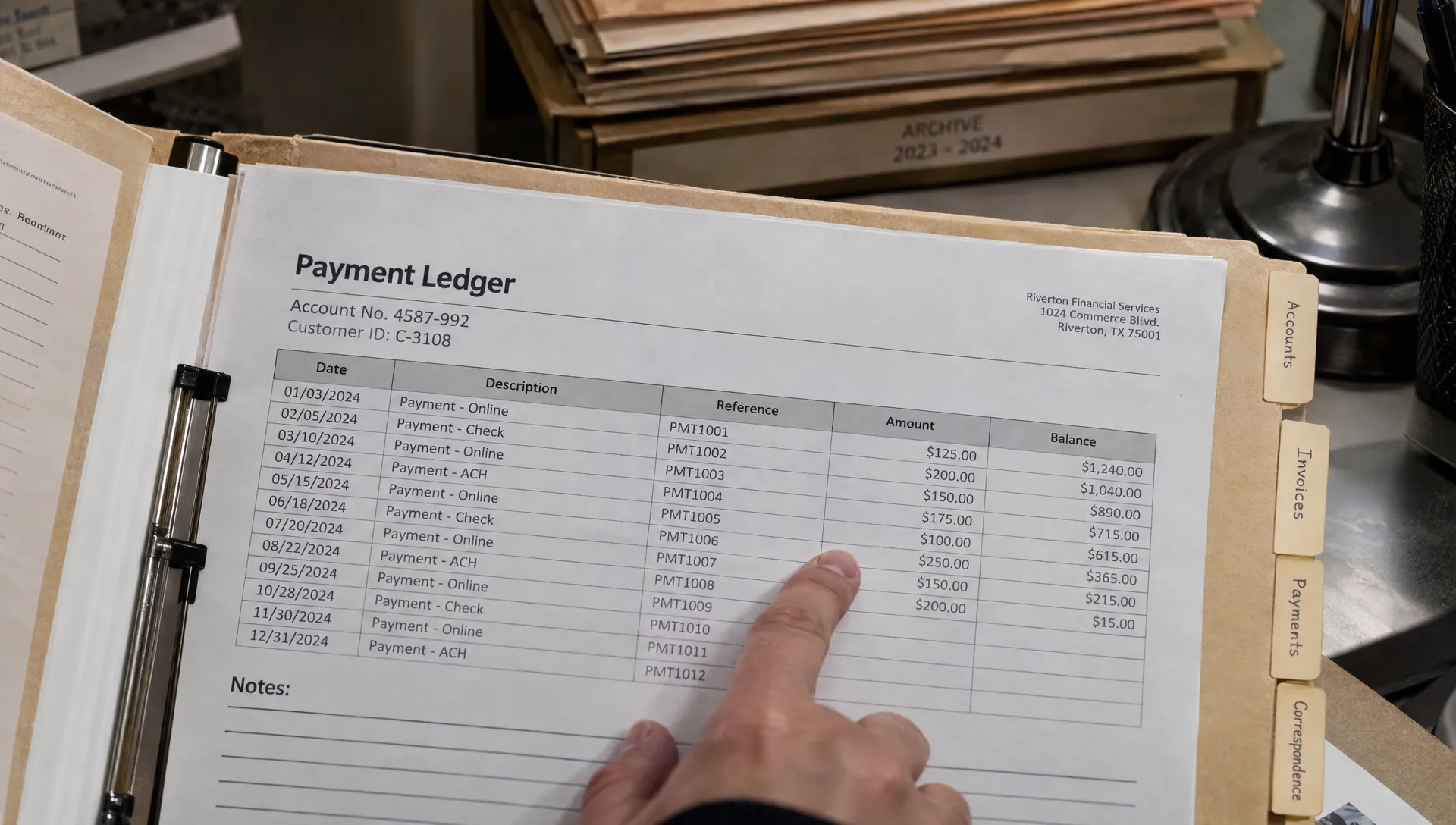
An arrears calculator can help you check unpaid child support, but the result is only as reliable as the payment history and interest rules behind it. A missed installment from January may have accumulated more interest than one missed in June, and a payment deducted from a paycheck may not yet appear on the account.
Whether you pay support or receive it, start with the same goal: build a dated record of what was due, what was credited and what remains unpaid. Then compare your estimate with the official child support account rather than treating the calculator as proof of the debt.
Separate unpaid support from the current monthly obligation
Current support is the amount due under the order for the present payment period. Arrears are amounts that became due and remain unpaid. An account may also include interest, costs or other charges that need to be tracked separately.
For example, a $600 monthly order and a $2,400 past-due balance are different obligations. Paying this month’s $600 does not necessarily reduce the older balance. Likewise, making a payment toward arrears does not automatically satisfy current support.
Use the order that applied during each period, including any later modifications. Do not recalculate old installments using today’s incomes or a new guideline estimate. A child support balance also requires different assumptions from unpaid rent, payroll arrears or a loan balance.
How to use an arrears calculator step by step
Work from your records toward an estimate, not backward from a balance you hope to confirm.
1. Gather the order and payment records
Collect enough documentation to cover the entire period you want to check:
- Support orders and modifications: Include the amount, payment frequency, effective dates and any separately ordered arrears payments.
- Official account history: Request a detailed transaction ledger, not just a notice showing the total owed.
- Payment evidence: Gather receipts, bank records, payroll statements and payment confirmation numbers.
- Interest information: Find the applicable rule, rate and calculation method for the relevant periods.
- Adjustments and credits: Identify approved direct-payment credits, reversals, refunds and other account changes.
Check whether the opening balance includes interest. Entering a combined balance as unpaid principal and then adding historical interest again can double-count part of the debt.
If the account distinguishes support owed to the family from amounts assigned to a government agency, preserve that distinction. It can matter when you ask about payment allocation or resolving the balance.
2. Choose a start date and an “as of” date
An arrears calculator needs a clear measurement period so you do not include payments outside the period or count the same installment twice.
You can start with zero before the first unpaid installment, or use an established opening balance from an account statement. If you use an opening balance, begin entering new charges and credits after that statement’s cutoff date.
The “as of” date is the date through which you want the estimate calculated. A balance through March 31 is not directly comparable with an agency balance through April 30 if another installment became due in April.
Also confirm payment frequency. An order requiring weekly payments should not be reconstructed as one monthly charge without checking how the account handles due dates.
3. Record each charge and payment on its actual date
For each installment, record the ordered amount and due date. Then enter each payment using the date recognized under the applicable accounting rules.
A payroll deduction date, agency receipt date and posting date may differ. Preserve those dates in your records rather than assuming they are interchangeable, especially when checking interest.
Do not automatically count gifts, clothing purchases or informal transfers as support credits. Keep the evidence and ask whether those payments qualify for credit under the order and applicable rules.
If the tool accepts only a starting balance and a monthly repayment amount, it may help with payoff planning but cannot reconstruct a detailed payment history. Use a spreadsheet or request an agency accounting for that task.
4. Verify interest settings and payment allocation
Before relying on an arrears calculator, confirm whether it supports the interest method your account actually uses. Interest rules vary by state, and a rate may change during the period you are reviewing.
Determine whether interest is simple or compound, when it begins accruing and which amounts bear interest. Do not assume fees or previously accrued interest belong in the interest-bearing principal.
Payment allocation matters too. A payment may be divided among current support, past-due principal, interest or other obligations under applicable rules. You cannot safely assume that every dollar paid reduces overdue principal by one dollar.
If the tool does not disclose these assumptions or cannot represent your account’s rules, treat its result as a rough planning estimate. Do not substitute a convenient default rate for a verified one.
Worked example: reconstructing unpaid principal
Suppose an order requires $600 on the first of each month. There is no opening balance, and the following payments are all recognized credits. For this illustration, interest and fees are excluded, and payments reduce the support principal shown.
An arrears calculator should reproduce the following principal balance if its inputs and assumptions match this example:
| Date | Support charged | Payment credited | Running unpaid principal |
|---|---|---|---|
| January 1 | $600 | $0 | $600 |
| January 10 | $0 | $600 | $0 |
| February 1 | $600 | $0 | $600 |
| February 20 | $0 | $250 | $350 |
| March 1 | $600 | $0 | $950 |
| March 15 | $0 | $400 | $550 |
Through March 31, total support charged is $1,800 and credited payments total $1,250. The unpaid principal is therefore $550.
This illustrates a useful cross-check:
Closing principal = opening principal + support charged − payments allocated to principal ± principal adjustments.
It does not establish the total legally owed. Interest may have accrued while earlier amounts were unpaid, even if those amounts were later paid. If part of a payment was allocated to interest instead of principal, the closing principal would also differ.
Calculate interest from each installment’s overdue date
A common error is treating the entire unpaid balance as though it became overdue on the same date. That can overstate interest when installments were missed at different times.
For a hypothetical simple-interest calculation using a 365-day year:
Interest = unpaid principal × annual rate × days overdue ÷ 365.
Consider a separate example with no intervening payments: one $600 installment has been overdue for 60 days and another for 30 days. At a hypothetical annual rate of 6%, the interest would be:
| Unpaid installment | Time overdue | Illustrative interest |
|---|---|---|
| $600 | 60 days | $5.92 |
| $600 | 30 days | $2.96 |
| Total | $8.88 |
Charging 60 days of interest on the entire $1,200 would produce $11.84 instead. The difference comes from timing, not from a different principal balance.
Use an arrears calculator that preserves those timing differences when possible. If a payment reduces principal during the period, interest generally needs to be calculated across separate intervals reflecting the changing balance, subject to the governing rules.
The 6% rate and daily formula above are illustrations, not a statement of your state’s law. Actual rules may use different accrual dates, day-count methods, rounding practices or compounding provisions.
Compare your estimate with the official account
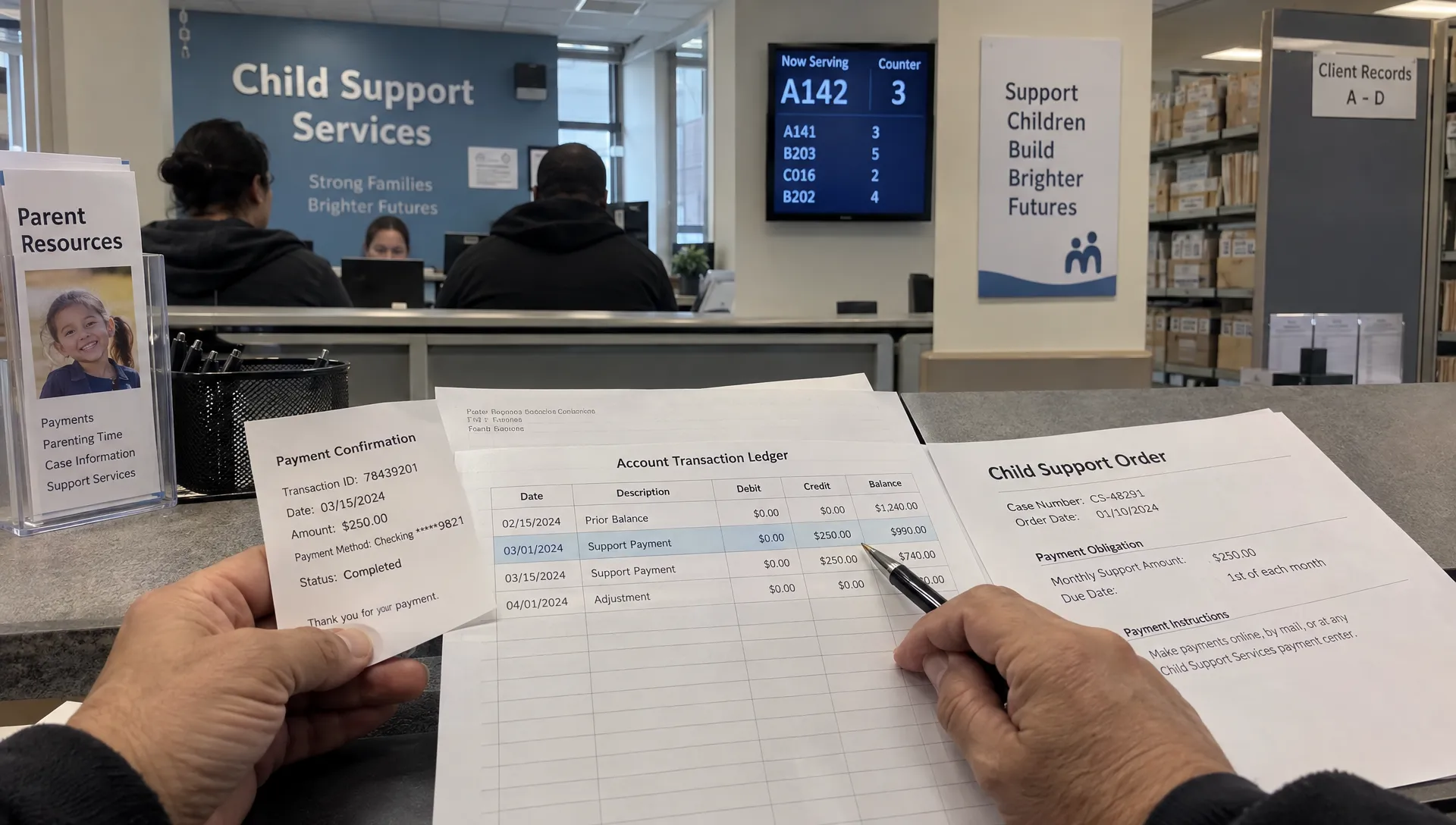
Compare like with like: the same case, cutoff date and balance categories. Ask for a ledger that separates support charges, payment credits, interest and adjustments where available.
First compare principal. If that differs, check for a missing installment, an incorrect order amount, an uncredited payment or an opening balance entered twice. If principal agrees but the total does not, investigate interest, fees and other adjustments.
When an arrears calculator disagrees with the agency ledger, identify the specific transaction or assumption causing the difference. “The calculator shows less” is less useful than “the February 20 payment of $250 is missing from this statement.”
Keep payroll deductions and agency postings side by side. Also check for returned payments, reversed credits and transfers between cases. In an interstate case, verify whether statements from different agencies describe the same debt before adding their totals together.
Send copies of supporting records and request an explanation or correction through the agency’s process. Keep the originals and confirmation of your request. You can locate the appropriate government office through USA.gov’s child support guidance.
Do not reduce or stop ordered payments because your estimate is lower. A calculation does not change the order or resolve an account dispute.
Estimate a repayment amount and payoff timeline
Once you have a supportable starting balance, separate ongoing support from the additional amount available for arrears. This avoids building a repayment plan that pays old debt while creating new missed installments.
An arrears calculator can help compare repayment scenarios, provided you check how it handles interest and ongoing charges.
Using the earlier $550 principal example, an additional $50 per month would clear that principal in 11 months if there were no interest, fees or new missed payments. If current support remained $600 monthly, the combined payment would be $650 per month under those assumptions.
When interest continues accruing, a simple balance-divided-by-payment calculation may understate the payoff time. Extra payments can shorten repayment, but confirm how they will be allocated and whether a court order or agency arrangement sets a required arrears payment.
If your income has fallen, ask promptly about modification options rather than assuming a lower affordable payment replaces the existing order. For context on the consequences of unresolved debt, see what happens if you don’t pay child support.
Frequently asked questions
Can an estimate prove how much child support someone owes? No. An arrears calculator produces an estimate based on its inputs and assumptions. Use it to organize records and identify discrepancies. The support order, applicable law and official accounting or court findings determine the enforceable obligation.
Can a lower income erase support that is already overdue? Usually, a later income change does not erase installments that already became due. Federal law generally prohibits retroactive modification of accrued support, with a limited exception states may allow for periods after notice of a pending modification petition. Get state-specific advice about your circumstances.
Does unpaid support disappear when the child becomes an adult? Generally, no. The end of current support does not automatically eliminate existing arrears. Confirm the order’s termination terms and any continuing repayment or interest requirements with the agency or a qualified attorney.
Can parents agree privately to cancel the balance? Do not assume a private agreement changes an enforceable debt. Court or agency action may be required, and amounts owed to a government agency may be treated differently from amounts owed to a parent.
Start with records, then check the estimate
Gather your order, dated payment history and interest rules before using the free arrears calculator available through Child Support Estimate. Keep the assumptions alongside your result so you can explain any difference when requesting an account review.
The estimate is a planning aid, not legal advice or an official balance. Use it to ask precise questions before agreeing to a repayment amount or disputing a charge.