What a Child Support Order Includes Beyond the Monthly Payment
Learn what a child support order covers beyond monthly payments, including insurance, childcare, medical bills, reimbursement rules and payment deadlines.
Child Support Estimate ·
A child support order can require more than a monthly transfer. Depending on state law and the terms entered in your case, it may address health insurance, childcare, uncovered medical bills, payment processing, past-due balances and when support starts or ends.
Those details matter because the monthly amount may not represent your entire obligation. They also determine what records to keep, how to request reimbursement and what happens when circumstances change. This guide explains what to look for, but your signed order and applicable state law control.
What to check beyond the monthly amount
Read the complete document, including incorporated worksheets, medical provisions and attachments. A worksheet may explain the calculation without containing every enforceable instruction.
| Provision | What to look for |
|---|---|
| Base support | Amount, payment frequency and first due date |
| Health coverage | Responsible parent, coverage requirements and premium allocation |
| Medical expenses | Eligible costs, each parent’s share and reimbursement process |
| Childcare | Qualifying care, allocation and whether costs are already included |
| Other expenses | Any expressly required education or activity payments |
| Payment administration | Payment destination, withholding and account information |
| Duration and arrears | Ending conditions, unpaid balances and repayment terms |
Separate costs already included in the calculation from costs payable in addition to it. Otherwise, you may mistakenly pay twice or assume an expense is covered when it is not.
Medical terms in a support order
Medical provisions commonly address two different responsibilities: maintaining health coverage and sharing eligible expenses that insurance does not pay. Do not assume the parent paying monthly support automatically carries both responsibilities.
Insurance coverage and premiums
Check which parent must obtain coverage, when that obligation applies and how premium costs affect the calculation. The relevant figure may be the cost attributable to the child rather than the entire family premium, depending on state rules.
Also look for instructions about exchanging insurance cards, providing policy information and reporting coverage changes. Dental and vision coverage may be addressed separately.
If employment-based insurance ends, review the required notice and replacement-coverage procedures. Losing a job does not, by itself, rewrite the existing terms.
Expenses insurance does not cover
The document may allocate deductibles, copayments, prescriptions, dental treatment, counseling or other qualifying costs. These shares are not necessarily 50/50, and state definitions of eligible expenses differ.
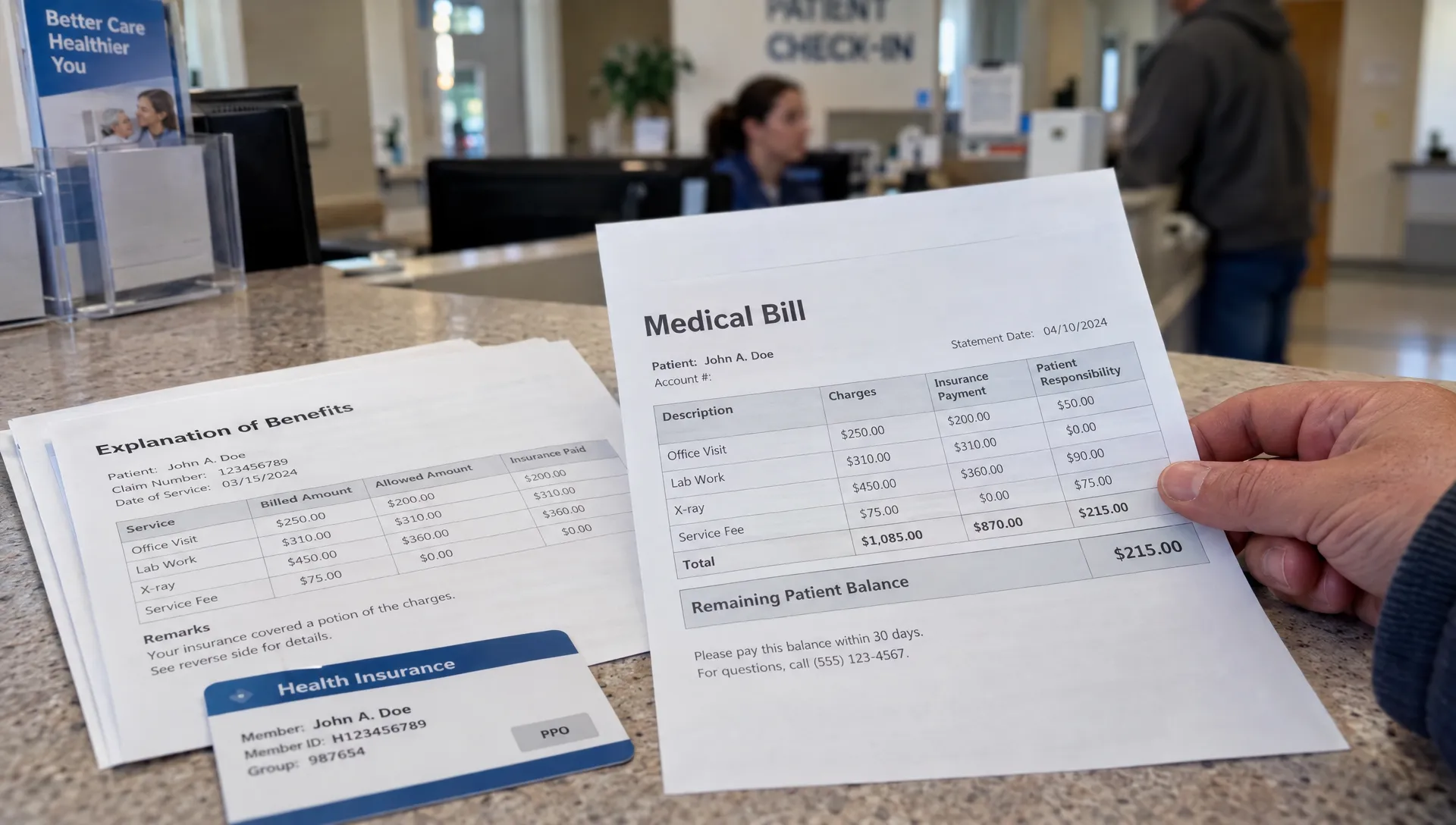
Look for requirements involving in-network providers, advance consultation or consent for nonemergency treatment. Keep the provider’s bill and the insurer’s explanation of benefits because they document different parts of the charge.
A bill showing the original price is not always enough to establish what remains payable after insurance processes the claim. Check whether the reimbursement provision requires proof that the requesting parent actually paid it.
Childcare and reimbursement rules
A support order may include qualifying childcare in the monthly calculation, require separate payments or use another arrangement permitted by state law. Identify the method before treating every daycare invoice as an additional charge.
Work-related childcare often receives different treatment from occasional babysitting. Depending on the jurisdiction, care connected with education or job training may also qualify. Summer programs can raise questions about whether they function as necessary childcare, optional activities or both.
For any shared expense, check these practical details:
- Eligible costs: Which services qualify, and are there provider or cost restrictions?
- Required documentation: Must the request include an invoice, receipt, insurance statement or proof of payment?
- Submission deadline: How soon must one parent send the request?
- Payment deadline: When must the other parent reimburse their share?
- Delivery method: Must requests go through email, a parenting app or another specified channel?
For example, if an eligible $200 medical expense remains after insurance and your assigned share is 40%, your portion would be $80. That calculation assumes the expense meets the applicable requirements and has not already been accounted for elsewhere.
When the wording is unclear, seek clarification through the court, agency or an attorney. Do not create your own deadline or deduct a disputed reimbursement from the regular monthly payment.
Education, activities and tax provisions
A support order does not necessarily make every child-related purchase a separately reimbursable expense. Private school, sports fees, tutoring, travel and college costs require closer attention to the document and state law.
Some expenses may be covered by base support. Others may be separately allocated by agreement or court decision where permitted. A parent’s decision to enroll a child in an activity does not automatically establish the other parent’s obligation to share the bill.
If additional expenses are addressed, look for spending caps, advance approval requirements and a definition of what the payment includes. An obligation to share an activity fee might not also cover equipment, transportation or overnight travel.
Tax provisions need a separate review. The document may assign responsibility for providing a dependency-related release or identify which parent is expected to claim certain benefits. A state-court provision does not override federal tax eligibility rules.
The IRS explains the release process in its Form 8332 guidance. Where a release is required, the appropriate documentation matters, and a release does not transfer every child-related tax benefit.
Do not assume that paying more support, paying tuition directly or having an alternating-year agreement automatically makes you eligible for a particular credit or filing status. Resolve tax questions separately from the payment calculation.
Effective dates, ending conditions and multiple children
The effective date in a support order determines when the obligation begins. It may differ from the hearing date, signature date or date an employer starts withholding money.
Check whether an initial balance covers a period before routine payments begin. If withholding starts later, you may need to make payments through the designated channel in the meantime. Confirm how those payments will be credited so the first collection does not create confusion.
The ending provisions deserve equal attention. Support does not end at the same age or under the same conditions nationwide. High school attendance, disability and other circumstances can affect duration under state law.
When multiple children are covered, do not simply divide the monthly amount by the number of children when one becomes ineligible. The document or state procedure may require recalculation, notice or further action.
Ending current support also does not necessarily eliminate unpaid balances. Likewise, a payroll deduction may require formal termination or adjustment even after the underlying obligation changes. Confirm the required procedure rather than assuming that a birthday alone will update the payment system.

Payment routing, wage withholding and unpaid balances
A support order usually identifies how payments must be made. Depending on the case, that may involve a state disbursement unit, another designated payment system or an approved direct-payment arrangement.
Follow that instruction even if another method seems easier. Cash, gifts, rent payments or purchases for the child may not receive credit as support. If you have already paid outside the designated system, preserve the evidence and ask how to request proper credit.
Withholding is a collection method
Income withholding directs an employer to deduct specified amounts. It is not the same thing as the underlying obligation, and its start date may not match the first due date.
Review whether the deduction includes current support, an arrears payment or other authorized amounts. There is no single nationwide percentage of a paycheck that determines every parent’s obligation. State guidelines establish the amount, while separate laws limit withholding.
Arrears need their own review
Past-due support is commonly called arrears. The document or payment record may identify an unpaid balance and an additional repayment amount. Interest depends on applicable law and the circumstances of the debt.
Compare the official account history with your receipts before assuming a balance is correct. For a closer look at collection procedures, see how child support enforcement works when payments stop. Enforcement addresses compliance; it does not automatically recalculate an unaffordable obligation.
What changes when income or parenting time changes?
An existing support order generally remains enforceable until it is changed through the authorized process. A job loss, new schedule or private agreement does not necessarily change the amount legally due.
Changes that may justify review include a substantial income shift, different childcare costs, altered insurance coverage or a qualifying change in parenting time. The applicable threshold and review procedure depend on the state.
Report changes when required, but distinguish reporting a change from requesting a modification. Updating an employer’s address with the agency, for example, is not the same as asking for a lower payment.
Our explanation of when and how child support can be modified covers that distinction in more detail. Do not assume a later reduction will erase installments that came due before you requested a change.
Parenting time and payment obligations are also separate issues. Denied visits generally do not authorize withholding support, and unpaid support generally does not authorize denying court-ordered parenting time. Address each problem through the appropriate legal process.
If a parent moves, changes jobs or cannot be located, contact the responsible agency about next steps. A move does not automatically cancel the case or transfer authority to a different state.
Records to gather before filing or requesting a review
Whether you are seeking a new support order or asking to change an existing one, organize records around the issue you need decided. Establishing an obligation, modifying its terms and enforcing unpaid amounts are different requests and may require different forms.
For an initial calculation or modification, useful records often include recent pay statements, tax returns, income documentation, the parenting schedule, insurance premium information and qualifying childcare bills. Self-employed parents may need business records that distinguish revenue from allowable expenses.
For reimbursement disputes, gather the relevant provision, invoices, insurance statements, proof of payment and dated requests. For payment-credit disputes, obtain the official payment history and match it against receipts or bank records.
Keep copies of the current document and every later amendment. An older version may no longer reflect the controlling terms, and a calculation worksheet alone may not show what was ultimately ordered.
Use USA.gov’s child support resources to find the appropriate state agency, then check the local court or agency for current forms and procedures. Ask which expenses its services cover, since assistance with collecting particular add-on costs can vary.
Frequently asked questions
Can an agency issue a support order without a judge signing it? In some states, an authorized administrative process can establish an enforceable obligation. Do not assume a document is optional because it came from a child support agency rather than a courtroom. Review its legal effect, deadlines and hearing or appeal instructions.
Does buying clothes or paying rent count toward monthly support? Not automatically. Voluntary purchases and direct payments may not satisfy an obligation payable through a designated system. Follow the payment instructions and seek formal clarification before substituting another expense for the required payment.
Can parents agree to a different split of medical or childcare expenses? They can discuss an arrangement, but a private agreement may not change the enforceable terms. Determine whether formal approval is needed and how to document the change before relying on a different split.
Does the monthly payment include all uninsured medical bills? Not necessarily. The calculation may account for some costs while requiring others to be shared separately. Review the medical-expense language, applicable thresholds and reimbursement requirements rather than assuming every bill is included or excluded.
Estimate the payment, then review the full obligation
A calculator can help you understand the base amount, but it cannot tell you everything your support order requires. Budget separately for any additional insurance, childcare, medical or arrears obligations identified in the controlling document.
Use Child Support Estimate’s free state calculators to estimate payments using simplified state guidelines, parent incomes, parenting time and qualifying expenses. Then compare the estimate with the actual terms and ask your local agency or a qualified attorney about unclear provisions. Calculator results are estimates, not legal advice or a replacement for an enforceable order.